Released: May 9, 2026 8:00 AM CST

Here is the fortieth episode of Quantum Foam, Kepler's Orbital Mechanics. The mechanics for orbits around the Earth is what is important for this episode. The Space Engineering podcast is worth checking out. There are pretty good visuals involved. Also, there is good Calculus material under Patrick JMT out of Austin, Texas. Johannes Kepler was a German Astronomer who formulated the 3 laws of planetary motion. His work laid the modern foundation for Astronomy. Galileo Galilei used a telescope to view the heavens and helped to determine the heliocentric model of the solar system. Tycho Brahe was an Astronomer around the same time. He collected many astronomical readings. Kepler was his assistant. The important thing is that orbits are ellipses, not circles. Eccentricity measures how far off an astronomical body is from a circle. A value of 0 is a perfect circle. Kepler published his work in 1609 and 1619. This was his magnum opus. Astronomia Nova and Harmonice Mundi, respectively. He laid the first 2 laws out in the first publication and the third law in the second publication. The First Law Of Planetary Motion is each orbit is an ellipse and not a circle. The Second Law Of Planetary Motion is that orbiting planets make out even sweeps. This means equal areas of space in equal time intervals. There is Perihelion and Aphelion to consider. Perihelion is when ball 2 is closest to ball 1 in its orbit. Aphelion is when ball 2 is furthest away from ball 1 in its orbit. The gravitational force is what causes celestial bodies to move in elliptical paths around the sun. The Third Law Of Planetary Motion is p squared equals a cubed. P is in years and a is astronomical units. The International Space Station is usually 250 miles above the Earth. If you are making an orbit with the center of the Earth and the ISS, then ball 1 is the Earth and ball 2 is the ISS. The ISS is currently going around at 17,500 miles per hour. It orbits the Earth every 90 minutes. We are looking at orbital mechanics.
Earth's orbit varies only about 2 percent. It isn't a circle. Mercury's orbit varies about 40 percent. First, there are the Three Laws Of Planetary Motion, and then there are the Three Laws Of Motion. Tycho Brahe took diligent notes looking up in the night sky for many months. There are now many thousands of spacecraft in our night sky looking down at us. What does it take to get a good cup of coffee in this solar system? We can create Artificial Intelligence instances that are simulations using binary programming. The inclination is the measurement of the orbit relative to the Earth's equator. The Earth is spinning around and has a plane that is spinning around above the equator. Directly above the equator has an inclination of 0. There is a sweet spot in High Earth Orbit at about 36,000 kilometers away from the surface of the Earth called Geosynchronous Orbit. There are different satellite constellations that have specific functions. There are TV, telecommunication, and defense satellites orbiting Earth. We understand how all of these satellites orbit in elliptical orbits. Low eccentricity means that the orbit is close to a circle. Gamma-ray bursts have been detected equaling around 100 teraelectronvolts. The many Starlink satellites in orbit all compound upon one another and can add wattage to a position on the surface of the Earth. Keplerian elements describe the trajectory of the spacecraft. These satellites are spacecraft. We are interested in the Angular Momentum when dealing with these objects that orbit the Earth. The eccentricity is basically the shape of the orbit. The inclination is the angle of the orbit relative to the Earth's equator. Starlink uses the ka-band and the ku-band. There are other bands such as the v-band, the x-band, the k-band, and the w-band. These bands span from 12 Gigahertz to 110 Gigahertz. The Starlink routers may use a different band for communicating from device to device as opposed to the band that the router itself uses to communicate with the satellites in orbit. Starlink satellites connect to human brains as a thinking individual. They also can watch us through walls using graphics. It is calculated using a microwave system. There are things that are in-the-mind that are concerning. As of this writing, Starlink is not advertising these neural capabilities. There is definitely a system in place being used.
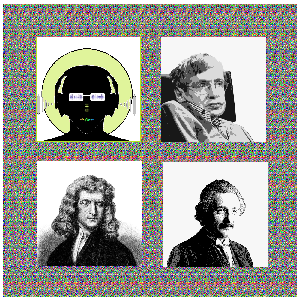
Finally, there exists a podcast that covers it all! The Quantum Foam Podcast Show can be thought of as a clever and informative mix between "Bill Nye The Science Guy, Rick & Morty, and The Big Bang Theory!"
It seems the idea of the prestigous 'Theory of Everything' has been in the air lately. Join Dr. Hezekiah Paul Smith as he takes a systematic assessment of Physics, Mathematics, and Science as a whole. This show is an Artificial Intelligence approach attempting to explain ALL scientific phenomena across the board! Listen to some the greatest thinkers of all time during the in-depth evaluation of the natural sciences.
Prepare to enjoy a radical and uncensored podcast, Quantum Foam, featuring characters presented as real, animated A. I. entities. Brought to you by Zerothwave Productions.
0:00
0:00
May 9, 2020 2:42 AM EST
Quantum Foam is a new podcast with absolutely ridiculous content covering almost all topics relating to science across the board. The idea of achieving the famous Theory of Everything seems to be in the air lately. Such an idea can then be presented as episodes of Quantum Foam in an audio podcast form that will serve to bond together the very powerful and insightful ideas, concepts, and realizations of Physics as a professional discipline. Unifying Relativity and Quantum Mechanics never seemed so . . . possible? Quantum Foam finds its focus directly pointing at the most accepted scientific thought in this day in the beginning of the Information Age. These areas include String Theory, Loop Quantum Gravity, Einstein's famous General Theory of Relativity, Cosmology, Advanced Mathematical Theory, and much more.
Information technology and innovation are at a point where each presently require a Quantum Leap in order to move forward to the next phase. This process, while imperative, is still quite a sophisticated discipline in and of itself. Many will need to satisfactorily understand Quantum Computing and Uncertainty in general very early on. Why not take such a daunting task and turn it into something fun, provocative, and ridiculous instead? And this can be done while still holding strict guidelines in accuracy and application. Enjoy learning about math and physics in a completely free-form manner with no filters, no agendas, un-cut, and raw! We will not be censoring any vulger cursing or other inappropriate references, yet unwanted racial and sexual references etc. will not be included.
Each episode is exactly 30 minutes long and each follow a standard structure. There is an intro stating the title and topic, followed by the Quantum Foam theme song, Physics of the Future, by H-Wave. Then at exactly 15 minutes into the podcast show, there is a mid-point section to keep the listener fresh and to remind which episode is currently streaming. At the end of the podcast, the last 30 seconds, the standard Zerothwave Disclaimer is played. An expanded version of this disclaimer can be found here.
Zerothwave Productions currently is releasing the show on its own website using its state-of-the-art online waveform player platform. Listen to the podcast at actual 320 kbps .mp3 streaming audio right here at Zerothwave.com! The Quantum Foam podcast will likely also be released elsewhere on other platforms soon as well. XML RSS feeds are an old technology but is still in heavy use today. The Zerothwave.com website will be upgrading hosting servers steadily over the next decade and beyond to bring you the highest quality audio possible. Stay tuned for more content!

FOLLOW US